

Plantonica
Bonsai - Gingko
Bonsai - Gingko
Couldn't load pickup availability
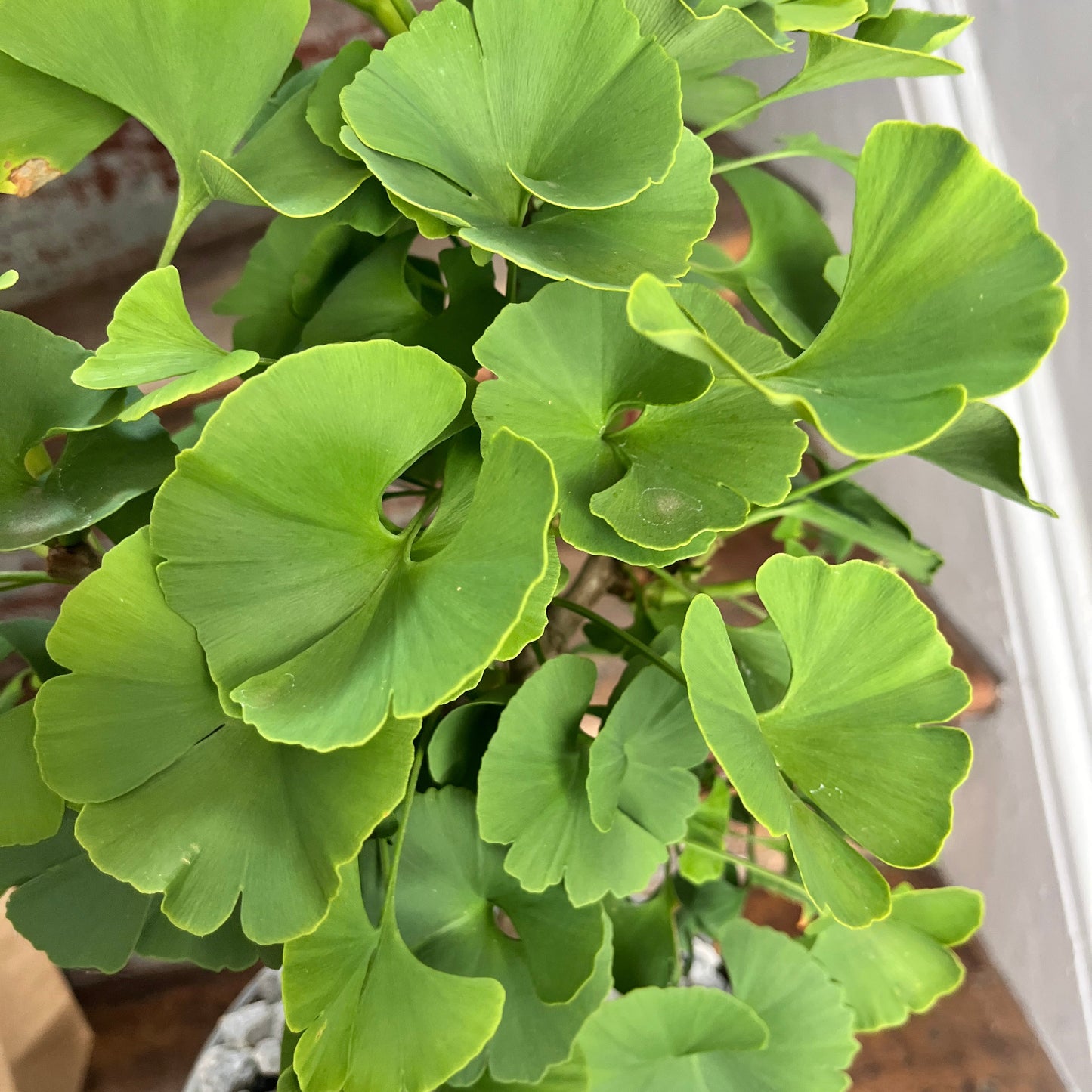
The ginkgo is a truly special tree — recognisable by its soft, fan-shaped leaves and elegant upright form in its younger years, slowly broadening and softening with age. Native to China, the ginkgo is often called a living fossil, with a lineage stretching back an incredible 270 million years.
This living fossil is thoughtfully paired with a handmade TONiC Ceramics bonsai pot — created to be cherished for years to come.
Watering
From spring through to autumn, ginkgos enjoy regular watering. Keep the soil consistently moist, but never waterlogged. As the cooler months arrive, ease back slightly and allow the soil to dry just a touch between waterings. Ginkgos are wonderfully unfussy when it comes to water quality — even calcareous (hard) water is perfectly fine.
Feeding
Begin feeding as soon as buds start to open in spring. A high-nitrogen fertiliser early in the season supports strong, healthy shoot growth. Without this boost, older ginkgo bonsai may focus their energy on short shoots only, limiting overall structure and branching.
Liquid fertiliser can be applied weekly until the leaves naturally yellow in autumn. Solid organic fertiliser also works beautifully, and for trees needing extra vigour, a combination of both liquid and solid feeding can be used.
Pruning & Wiring
Once new shoots have grown five or six leaves, gently prune them back to one or two leaves to maintain shape and balance. Larger cuts don’t heal easily on ginkgo, so it’s best to avoid them where possible. When needed, always use cut paste to protect the tree.
Ginkgos can be wired at any time of year, as their branches are naturally flexible. Take care with the soft bark — gentle handling will prevent damage and allow the tree to settle comfortably into its form.
Repotting
Younger ginkgos benefit from annual repotting in spring, while more established trees can be repotted every two to five years. Be conservative when pruning roots — ginkgos prefer a lighter touch. A standard, free-draining soil mix works well, and these trees are remarkably adaptable, tolerating a wide range of soil types and pH levels.